
Being Analog in a Digital World
When the power is out, what's a weaver to do? *snicker*

We spend a month or two away from home on occasion. Because I do not exclusively work on a 16-shaft Glimakra floor loom, I can travel with all three of my rigid heddle looms, still work on Mingo’s Corner, and manage all of the things. It’s quite lovely.
The upside/downside of the traveling weaving roadshow is enforced constraints. In some of the places we retreat to, we don’t have postal mail service (small towns and PO Boxes go hand-in-hand1), so I need to plan ahead and take everything I think I will need, plus anything else I can squeeze in that might come in handy. I have to be intentional about what I plan to work on - and that’s usually a good thing. I always pack a few extras, too, just in case I look at the next thing and am not inspired.
It’s a lot to pack and plan, but it’s fairly routine at this point as I’ve been doing it with my weaving for over five years. I also pack some books, jigsaw puzzles, at least one knitting and/or crochet project, and maybe a cross stitch project, and the laptop .2 Of course, the laptop sees daily use.
Until It Can’t Be Used
I was working on a Musing draft when an incredible noise caused me to jump out of my seat and head for the interior of the condo.
People compare the sound of a tornado to an “oncoming train.” It’s probably as close of a comparison as one can make, but it is a unique sound all the same. We heard trees cracking and saw a local transformer flash and pop, the lights went out, and wood started to smolder.
It took about an hour for us to realize that this was a BIG Weather Event (as opposed to one tree taking out the transformer on our block).
After walking around the town and seeing these enormous trees uprooted and blocking lots of roads, we started to get a sense that the power outage could be a while.
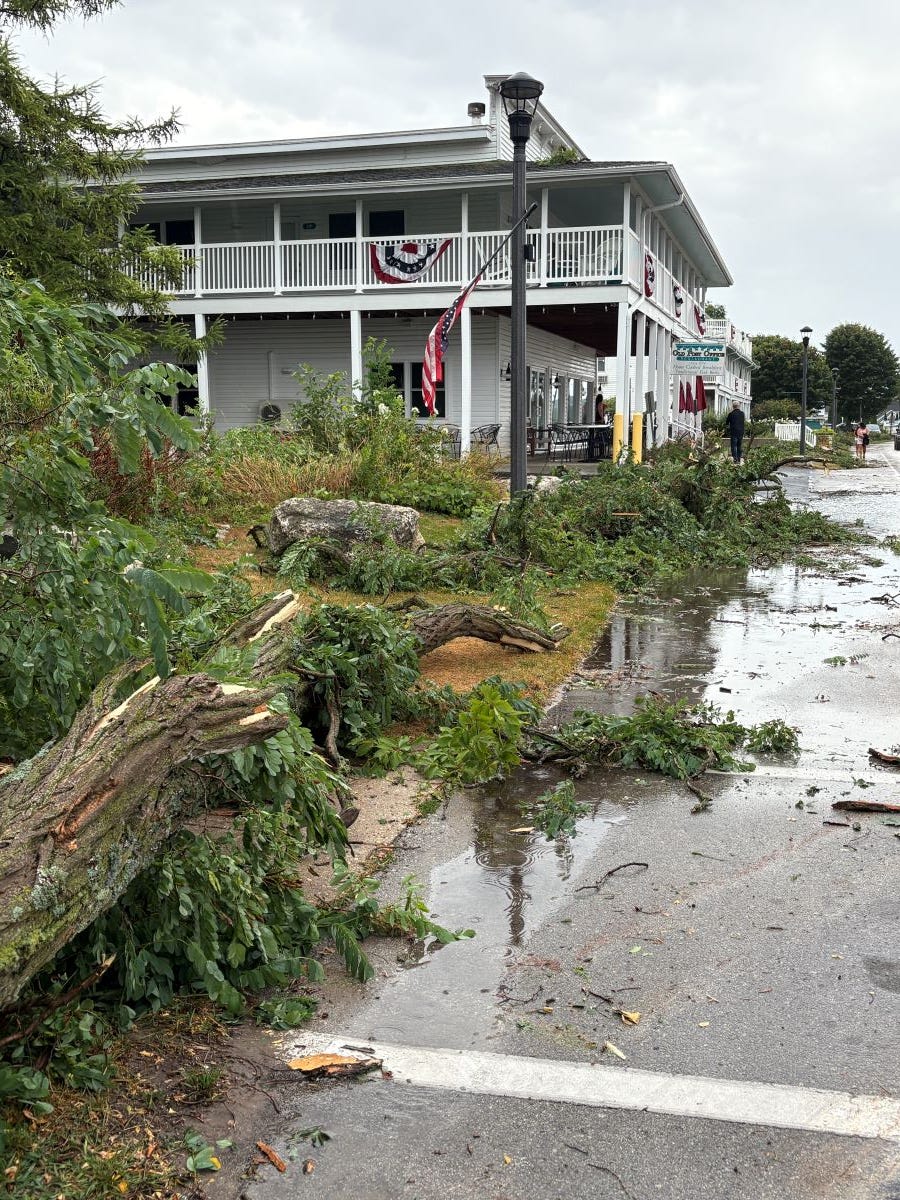
I was finished weaving for that day, so I went back to our space and pulled out a jigsaw puzzle.
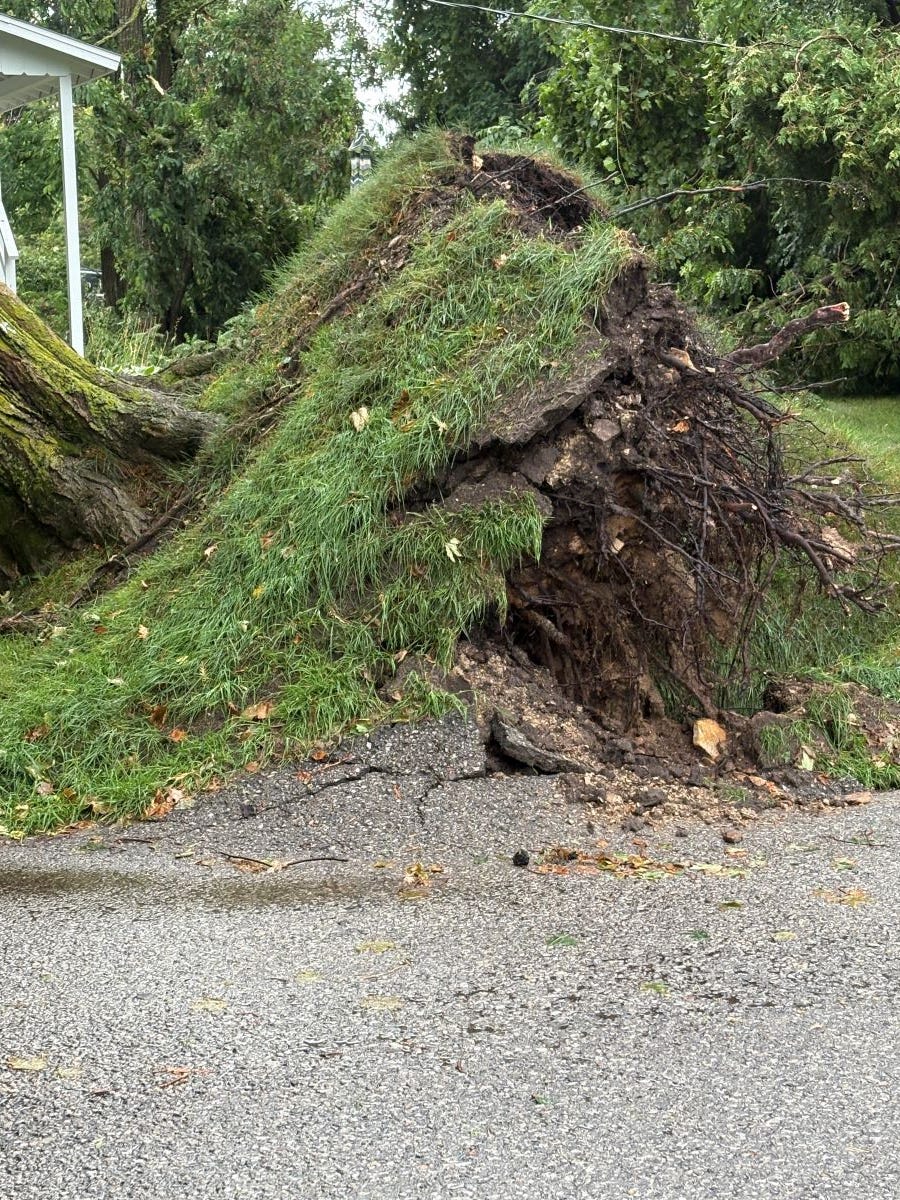
And So Begins Our Analog Life
Honestly, it was SO nice.3 Everything was quiet. I always forget between power outages just how noisy “power” is. It’s not invasive - most of us can tune it out most of the time - but being without electricity means there’s not a constant general “hum” or “whine” in the background of life.
I love this profound silence.
What was more interesting was how little our life actually changed during the 40 hours we didn’t have power. We were fortunate in that the temperatures were mild (mid-70s for a high; mid-60s for the lows), so we were neither overheated or freezing. We had water set aside4 in gallon jugs in the refrigerator, intended for upcoming hiking, but handy nonetheless. We also had flash lights and back-up power packs for the phones.
Except for showers and cooking, we didn’t have to change much of what we did. Eventually, we did lose cell service5, but that wasn’t a major thing for us. We didn’t have to run anywhere for anything. We had salad, cherries, granola, and ham sticks, so we just cobbled together meals.
Of course, I could weave
I was outdoors, on the porch, where there was plenty of daylight! It was actually very enjoyable. Outdoors, on the porch, is where I weave a LOT of days in Wisconsin, so it wasn’t unusual. But, without the lure of the digital options, it was easier to stay out there considerably longer. My only limitation was how long I could tolerate the bench I use when weaving out there. Then I would go inside and read or work on a puzzle.
My husband has often conjectured what it would be like to have lived in some of these remote areas when they were first settled. This area was logging and fishing, and had its first permanent non-native settlers in the 1850s, and no paved roads until the 1940s, so it was quite isolated. When we were going to sleep the first night, he said, “It must have been this quiet way back then.”
While I was weaving, I thought about how connected I feel, at times, with the deep history of weaving as a cultural tradition. That connection was pretty strong during our analog vacation.
Interestingly, Chris Acton offered a video on this very topic this week, so I will share that here:
Speaking of Acton Creative
The October Weave Along (OWAL) is *almost* here! Details will be in your inbox on Monday (as in the Monday coming up!). As usual, there will be a rigid heddle project AND a floor loom project (provided by Chris) and you are welcome to join in on whatever loom you have available. For the rigid heddle pattern, you will need 11” of weaving width (the pattern sample was woven on a 16” Ashford SampleIt), a single 10-dent heddle reed, two stick shuttles, a heddle rod with 22 string heddles, and a pick-up stick.
I will have a LOT more details for you on Monday - but there will be a few more changes to the WAL that you will want to note as well.
Fantastic Finishes!
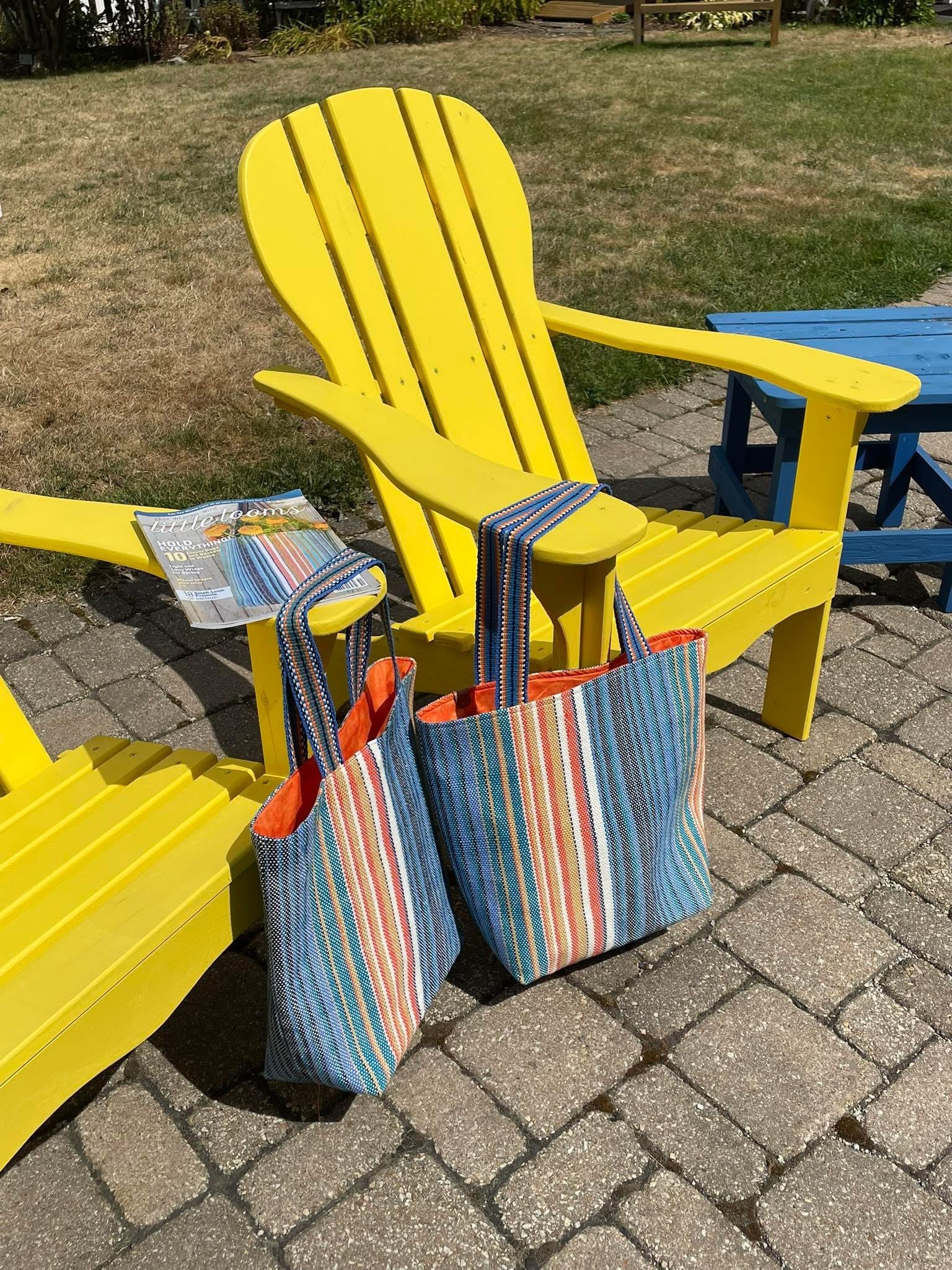
Wow, I have TWO fantastic finishes this Musing! Both of these are from patterns of mine in Little Looms - the first is not one but TWO Weaving Class Totes, shared on FB by TC.
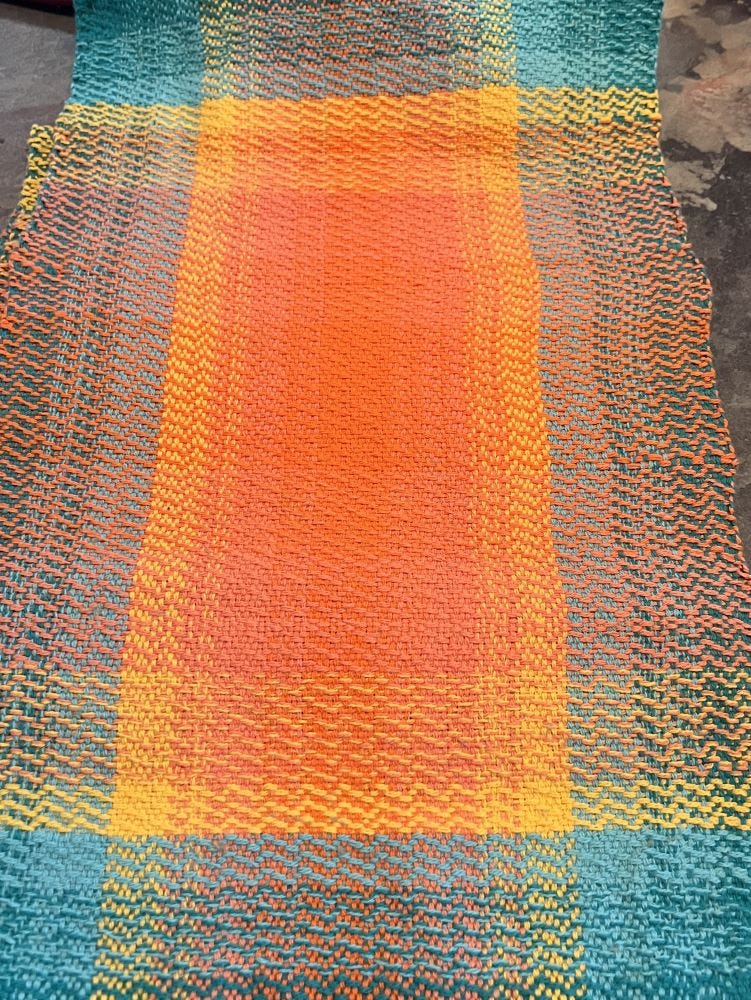
The second photo are some Tropical Sunrise Towels by Kris! What I love about these are that she persevered - we may have had a few email exchanges as she worked. But they look splendid after wet-finishing!
Watch your inbox on Monday for the Musing that will announce the Weave Along! Until then, take care, try going analog for a while, and immerse yourself in weaving.
And we rent, which means it’s just easier not to mess with the postal service for only 30 days away.
Physical and digital books, usually smaller puzzles, and the cross stitch is usually a Mill Hill kit.
Not to minimize the loss of business and property damages. Just for our singular situation.
Surprise! Our rental is on a well, so no running water when there isn’t power. I grew up like this, so I was prepared for what that meant. Husband hauled water from Green Bay for flushing.
Cell towers have back-up power supplies, but those eventually lost power. We could make emergency calls and do some texting, but that was it.
When the power is out all we hear is the rhythmic ticking of the antique clock that was my grandfather's over100 years ago.