
Continuing Education
Because artistic growth needs nuturing

Fifth, Continuing Education
Some of you mention you like my stories, so it’s time for a short one!
In 2022, I was about a year away from starting Mingo’s Corner. I was considering a table loom (for no other reason than that it seemed like a nice new challenge. Little did I know….) We were driving home from our August in Wisconsin and we usually make an overnight stop in Chesterton, Indiana, to stay at this B&B that offers accommodations in either a refurbished New York Central Freight House or a renovated box car or caboose. The fact that this B&B is also next to one of the busiest rail lines in North America is part of the attraction.1 BUT, also, next door, is Three Moons Fiberworks. So while the husband watches trains, I can blissfully shop for weaving, spinning, and knitting fibers next door. It’s a small bit of heaven for both of us!
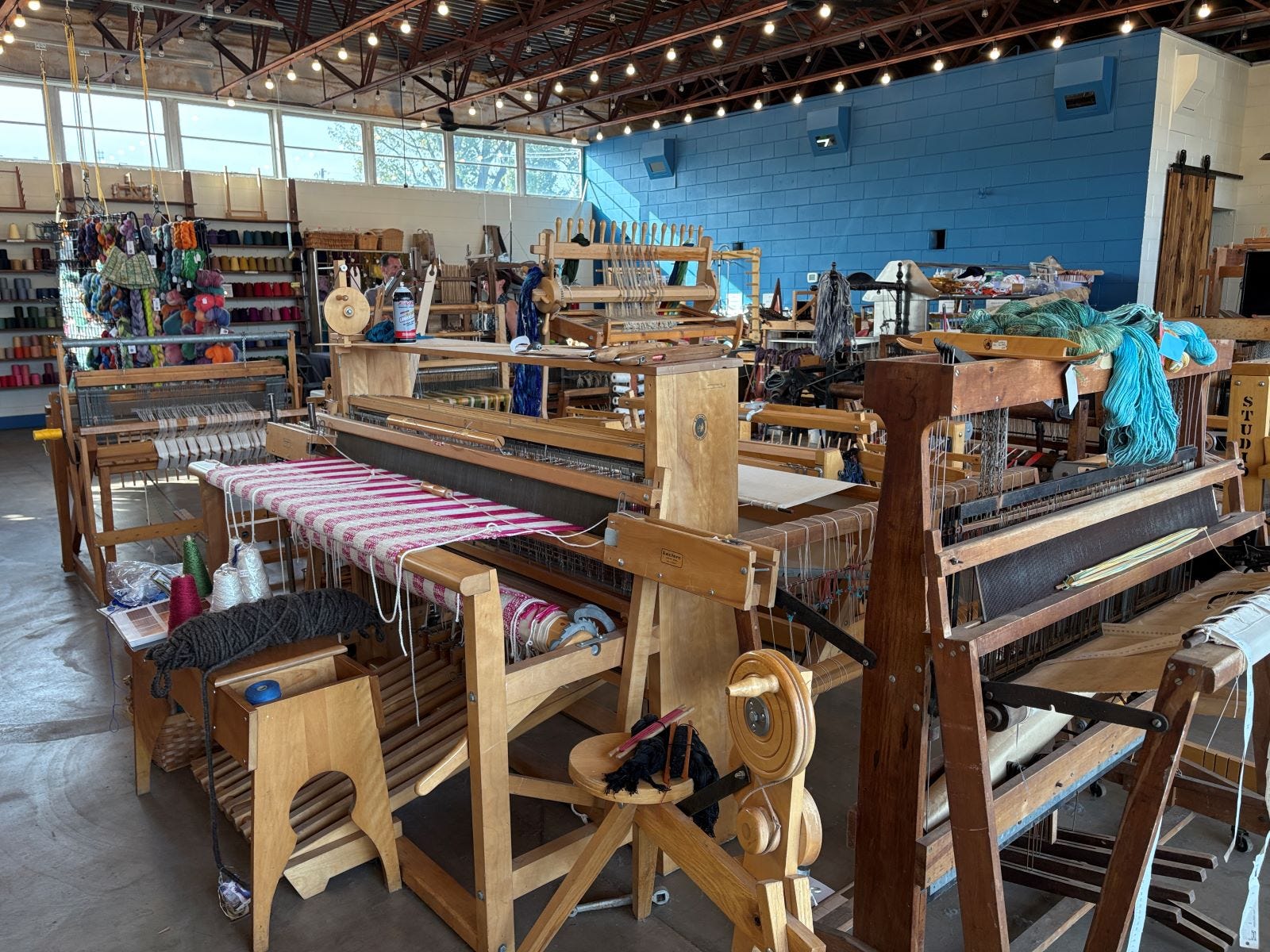
At that time, I enquired about weaving lessons and was told that there was a 3-day workshop using table looms coming up in about a month, taught by Chris Acton. I got excited, took the info, and spent a chunk of next day’s car ride home looking up table looms and Chris Acton, in general. I’m pretty sure I signed up for her newsletter then, too. In the end, I opted not to take the class, due to timing. But it was the beginning of my connection with Acton Creative.
Fast-forward to this year and Chris and I are on a Zoom together with Jodi Ybarra, talking about the Weave Along. I casually mention how much of an imposter I felt, putting out a multi-shaft version of the Box of Chocolates pattern without actually having *ever* even woven on a multi-shaft loom. And Chris pipes up with, “I’m teaching a class at the end of the month.”
Well, weaving and trains - it took me about five minutes to get the husband on board for 3-days of train watching! And I took Chris’s class, which was concise, thoughtful, and totally removed all of my trepidations about what I had only watched others do online.
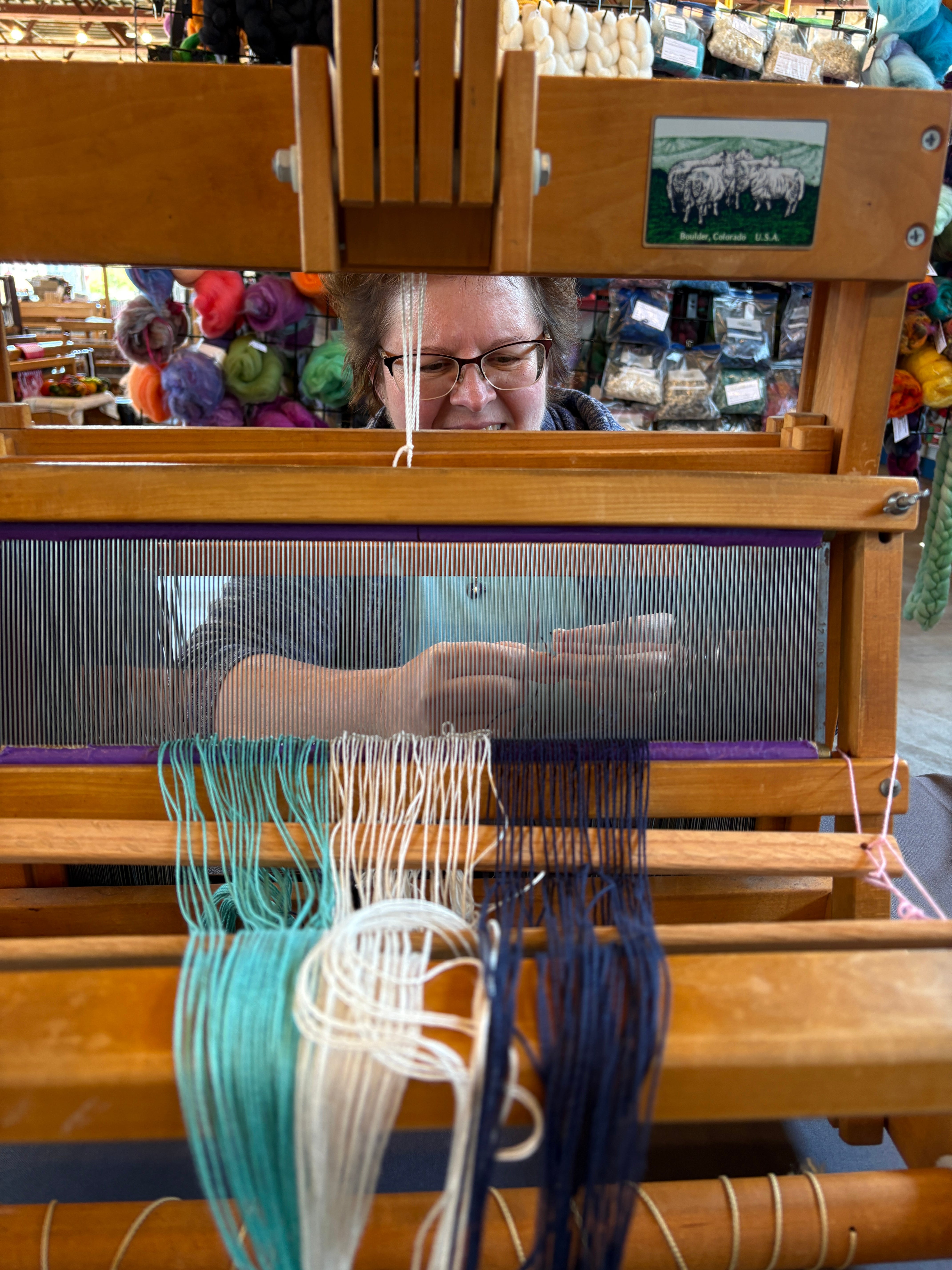
The Flip Side
The obvious “dark side” to this class is finding a way to USE this new skill before I LOSE it. Enter the enigma of the floor loom at the yarn shop where I work a couple of days a month - The Clay Purl.
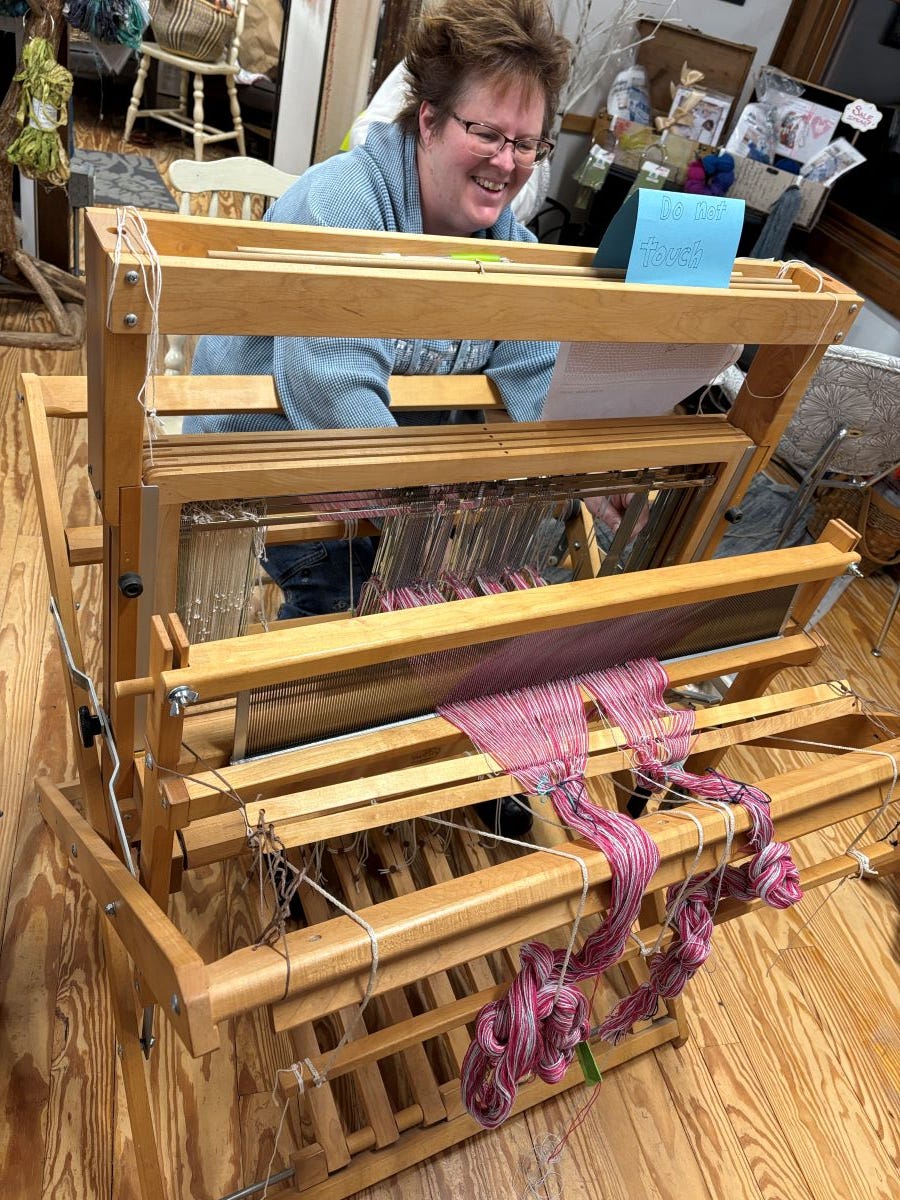
We have had this floor loom in the shop for a while now. It’s been intimidating me, mocking me, and generally creating that “itch” to understand it fully, since it’s on the periphery of my life. After Chris’ class, I was determined to try my newfound skills upon it.
However, October in the southern hills of Indiana is a busy, busy month. It’s also the time of year that Steve and I like to take a short trip somewhere - this time, to Missouri2, to see Hamilton, MO, which is Quilt Town USA (home of Missouri Star Quilting), and Hannibal, MO, home of Mark Twain/Samuel Clemens.
As usual, travel is a delightful break, new ideas for using handwoven fabric are now on the idea list, and I am ready to get back to my rigid heddles - as soon as time frees up to do so!
I have a new-to-me yarn to play with on the rigid heddle - Bamboo/Cotton 8/2 by Brassard. I have had a draft for some very heirloom-style napkins on my list for a while - it’s time I give those a go! I *think* they will be one heddle and THREE heddle rods - ah, time to explain that.
Why Sometimes More Tools is Better
I usually agree with “less is more.” I have played a fair amount in the multi-heddle/multi-shaft sandbox and it’s hard to beat the rigid heddle for a 3-shaft design that is twill-based. If you’re new to the multi-shaft playground, plain weave (over/under in a grid fashion) is what most weavers learn first (on pot holder looms or the rigid heddle - or even multi-shaft looms, I’ve learned!) But, a second, very durable and integral structure to weaving is twill.
I’ve talked about twill a fair amount in the Musings, but just to clarify, twill is the “diagonal looking” weaving pattern one sees frequently in fabrics - particularly your jeans. That diagonal pattern that is prevalent in denim fabric indicates a twill structure.3 In twill, the yarns go over 1, under 2 (or any of a number of both even and uneven integers) and this creates the diagonal.
With the rigid heddle, we can do twills pretty easily, especially the 1/2 types (or 2/1 - it’s the same thing, just the back side.) But what the rigid heddle doesn’t do well when you push it to multi-shaft projects is plain weave - ironic, right? What the loom is known for becomes a much more involved process when we start adding the fourth shaft. You can certainly *do* plain weave with four shafts on a rigid heddle, but it requires making ALL of the sheds using lifted heddles and/or heddle rods/pick-up sticks.4
However…
When I am plotting a project where plain weave is going to feature pretty significantly in some fashion, I like to opt for just regular plain weave - as in heddle up/down, and only one heddle if I can manage it. It’s just easier.
Sometimes, the additional requirements of a multi-shaft project are easily managed with a pick-up stick, or pick-up stick and heddle rod. We will see where this napkin project takes us, but as I “mentally weave,” I am thinking three heddle rods with one rigid heddle.
Which reminds me!
I have some Seine Twine loom waste (which I use to make string heddles) available to the first two people who get in touch and want to try making string heddles with this material. It’s loom waste from my Krokbragd piece and they are quite long pieces - 22” or so. Enough to get at least two string heddle pieces out of each length. Either leave a comment or reply to the email you received and I will get back to you for your mailing address. These are free - I just drop them in an envelope and post them to you!
I’m going to wrap-up for this Musing! Next time - who knows? I might have a sample off the Wolf Pup at the shop - or a teaser about the napkin project. Until then, find something that inspires you - color, pattern, or fiber, and enjoy your weaving!
For my husband - the rail fan…
And more trains…
NOT to be confused with the faux diagonal pattern that sometimes shows up in plain weave that we fondly call “tracking.” It’s still plain weave even if it visually pretends otherwise.
I feel like I am caveating everything - but if you only wanted a high density plain weave, you would still need two heddles. You would just lift BOTH heddles or lower BOTH heddles for plain weave. Not difficult, but slower than we are used to.
I am enjoying your writings and I’m eager to see what your napkins will look like. I’m trying to catch up on all my rigid heddle projects before I start on the 4 shaft loom, but not sure if I can wait. That you for keeping my enthusiasm up!